
3 Chemistry Mental Models For High Leverage Thinking
The Science of Turning Effort Into Momentum

Every great leap forward starts the same way; with resistance.
But chemistry—yes, actual chemistry—gives us a framework for understanding why some sparks fizzle… while others ignite movements, transform industries, or reshape entire lives.
Today, I want to share three mental models from the Chemistry section of The Great Mental Models (Vol. 2) that have changed how I think about starting projects, accelerating progress, and combining ideas into something new.
Paul Graham once said:
“There’s at least one time when it’s okay to lie to yourself:
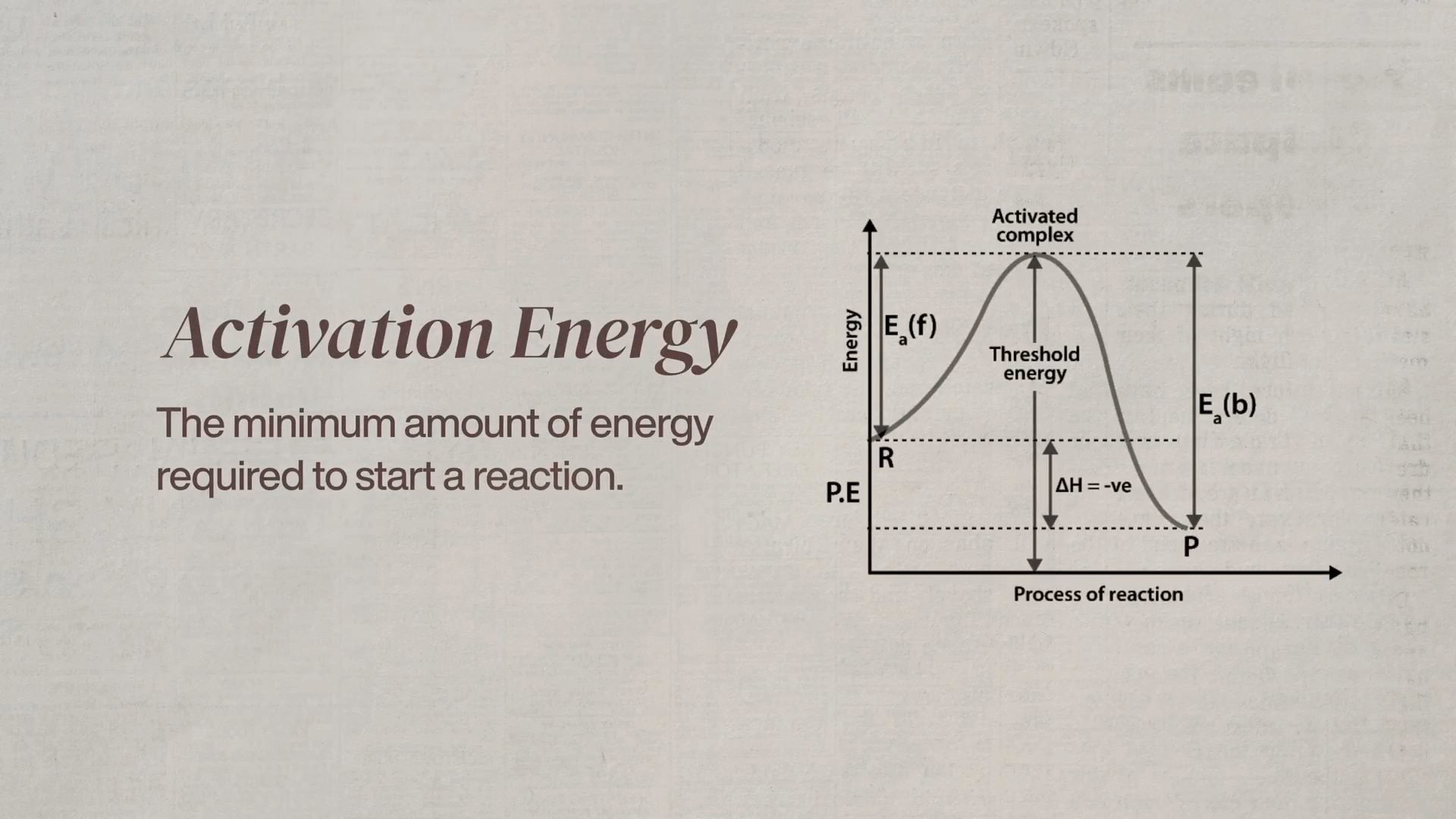
to get the activation energy required to start a new project.”
Activation energy is the minimum energy required to start a reaction.
No spark → no fire.
Take a match.
Rub it gently across the striking strip and nothing happens.
Add a little more force—cross that invisible threshold—and suddenly: ignition.
But if you want to create lasting change, know this:
You need enough activation energy not just to start a reaction, but to power it through to its conclusion.
In the 1980s, a young military officer named Thomas Sankara attempted something almost impossible.
He took over one of the poorest countries in the world—Upper Volta, later renamed Burkina Faso, “Land of Upright People”—and tried to rewire it from the inside out.
He vaccinated millions of children in weeks.
He redistributed land from feudal landlords to farmers.
He cut his own salary, sold off luxury government cars, and replaced them with modest vehicles.
He banned lavish spending by officials and lived simply himself.
For a brief moment, the reaction ignited.
People believed change was possible. Participation surged. Momentum was created.
But there wasn’t yet enough kindling on the fire that Sankara started.
When he was assassinated in 1987, just four years into his presidency, the old order returned almost immediately.
Corruption crept back in. Wealth reconcentrated. The system reverted.
Lesson:
Starting isn’t enough.
You must create a runway of support—habits, allies, systems, early wins—to carry your idea through its fragile phase.
Catalysts don’t make a reaction possible. They make it faster.
Your stomach uses enzymes—biological catalysts—to break down food in milliseconds.
Without them, your lunch would literally rot inside you before you absorbed any of it’s energy.
Catalysts don’t get consumed. They don’t change the outcome.
But they radically reduce the time and energy required to get there.
Outside of chemistry, here are some more abstract examples of catalysts.
A new technology that changes whats possible (Internet, AI)
A book that changes the way you think
A friends words that give you the courage to take action
One of history’s greatest catalysts was the printing press.
Before Gutenberg, copying a book meant sitting in a monastery with a quill for months. Philosophers would literally travel around to scriptoriums to get their hands on one of Aristotle’s works. Knowledge moved slowly. Ideas took decades to spread.
The printing press made the literal copying of knowledge cheaper, faster, and more widely available, lowering the activation energy needed for learning. It’s impact on humanity was nothing shy of profound.
Lesson:
To accelerate your progress, identify your catalysts. When a new one reveals itself, use it!
In chemistry, alloying means mixing two or more elements to create a material with new, superior properties.
Back in the day (3300 B.C.E.) Copper was widely used for tools and weapons. Tin was also useful.
But if you mixed 90% copper with 10% tin, you were left with Bronze, an alloy much stronger than both copper and tin. Welcome to the Bronze Age.
Stronger plows → more food
Stronger weapons → changed the dynamics of power
Stronger tools → new architecture
The same thing happens in culture.
15th-century Florence was the birthplace of one of history’s greatest periods of alloying: The Renaissance
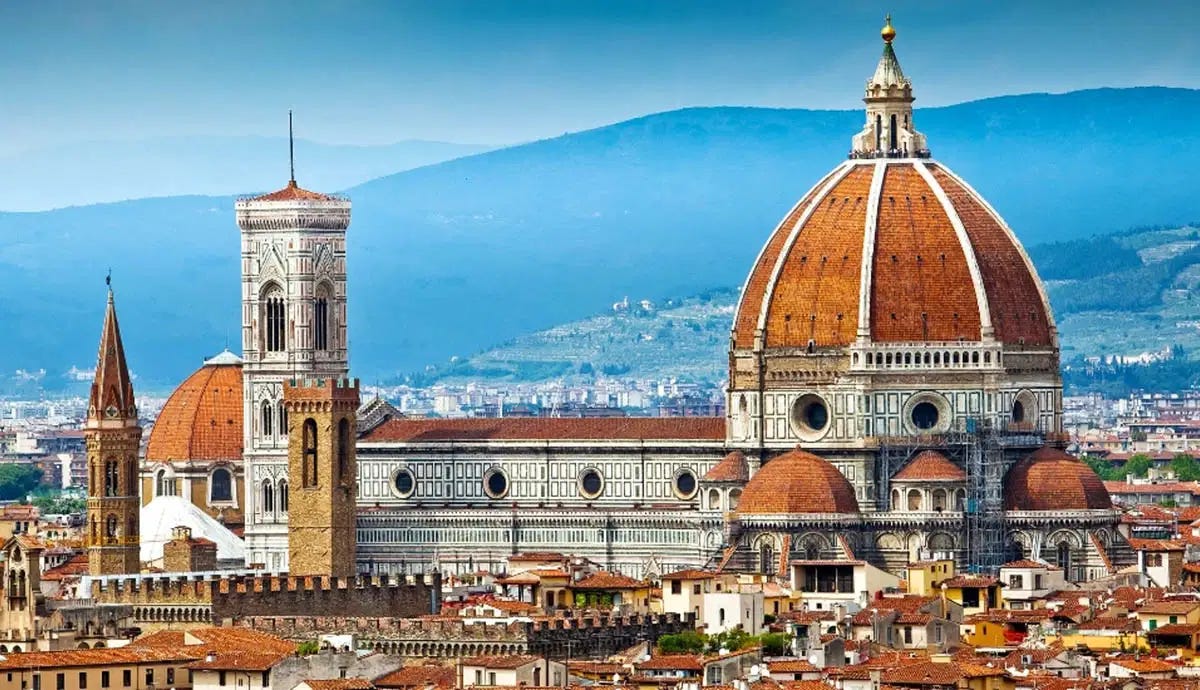
Thinkers, artisans, mathematicians, sculptors, poets—they collided, and cross-pollinated eachothers work.
Da Vinci blended engineering with art.
Brunelleschi blended geometry with architecture.
The Medici blended banking with patronage and taste.
Many of todays modern wonders from architecture and engineering to art and technology can be traced back to the springboard for human evolution that was the Renaissance era.
Lesson:
Breakthroughs often come from combining skills, perspectives, or people who don’t normally mix.
And if you want to go even deeper, start with my breakdown of the nine most powerful mental models used by history’s greatest thinkers—it’s the most-watched video on my channel, and for good reason.
— Dante

If you use Notion, be sure to pick up my weekly planning template that is SIMPLE and EFFECTIVE. I hate stuff that’s complex for the sake of looking sophisticated.
The Sunday Systems Weekly Planner