
Advance the Ball
How A 1% Improvement Can Be A 37x Multiplier

Goal: Make consistent progress on meaningful work instead of waiting for perfect conditions.
Mental Model: Advance the Ball — The discipline of making forward progress every day, no matter how small or unglamorous the step, rather than freezing in perfectionism or gambling on hero shots.
Imagine you’re deep in a project—building a company, writing a book, launching a product. Then life happens: a deal collapses, investors bail, you're getting a divorce. Suddenly, you’re so deep in the forest you can’t see the mountaintop anymore.
Most people react in one of two ways:
Perfection: Swing for the heroic, all-or-nothing miracle shot that fixes everything at once.
Paralysis: Freeze, overthink, and wait for “perfect conditions” to return.
Both usually make things worse.
Fortunately, there is a third option: Advance the Ball.
I learned this as a kid on the golf course. After hitting my drive in the woods, my ball was buried in the trees. I stood there, club in hand, ready to muscle a hero shot toward the green. An older gentleman with whom I was playing looked at the lie and said, “Instead of trying to reach the green, why don’t you just advance the ball?”
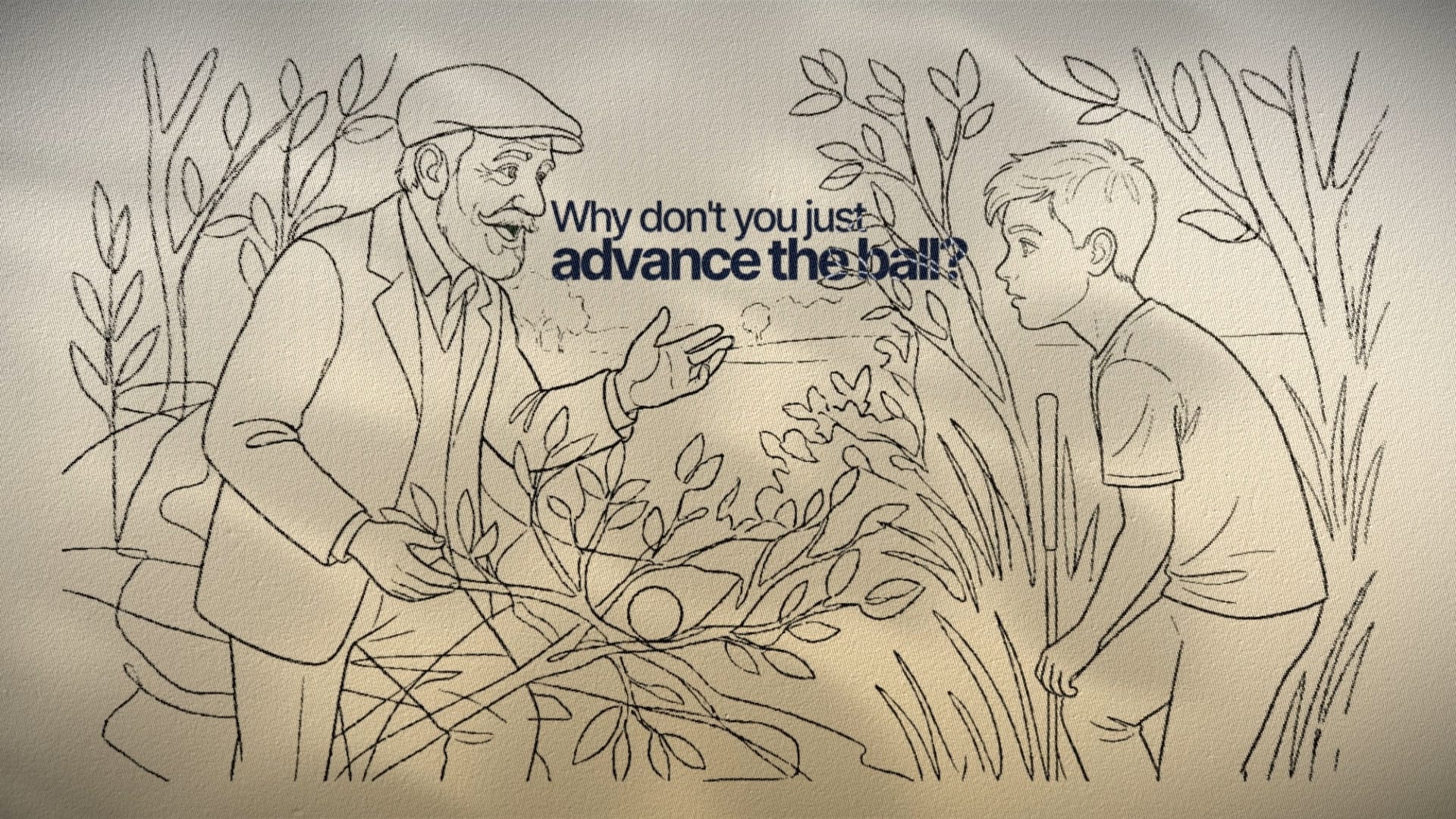
I took a short, safe swing. The ball popped onto the fairway. Not glamorous. Still far from the hole. But undeniably closer, and out of the woods.
“That’s the whole game right there,” he said. “Advance the ball.”
Don’t let a bad situation become a total disaster.
How A 1% Improvement Can Be A 37x Multiplier
Small daily improvements compound dramatically.
As James Clear lays out in Atomic Habits, if you can get 1% better every day for a year, you’ll end up 37 times better by year’s end.
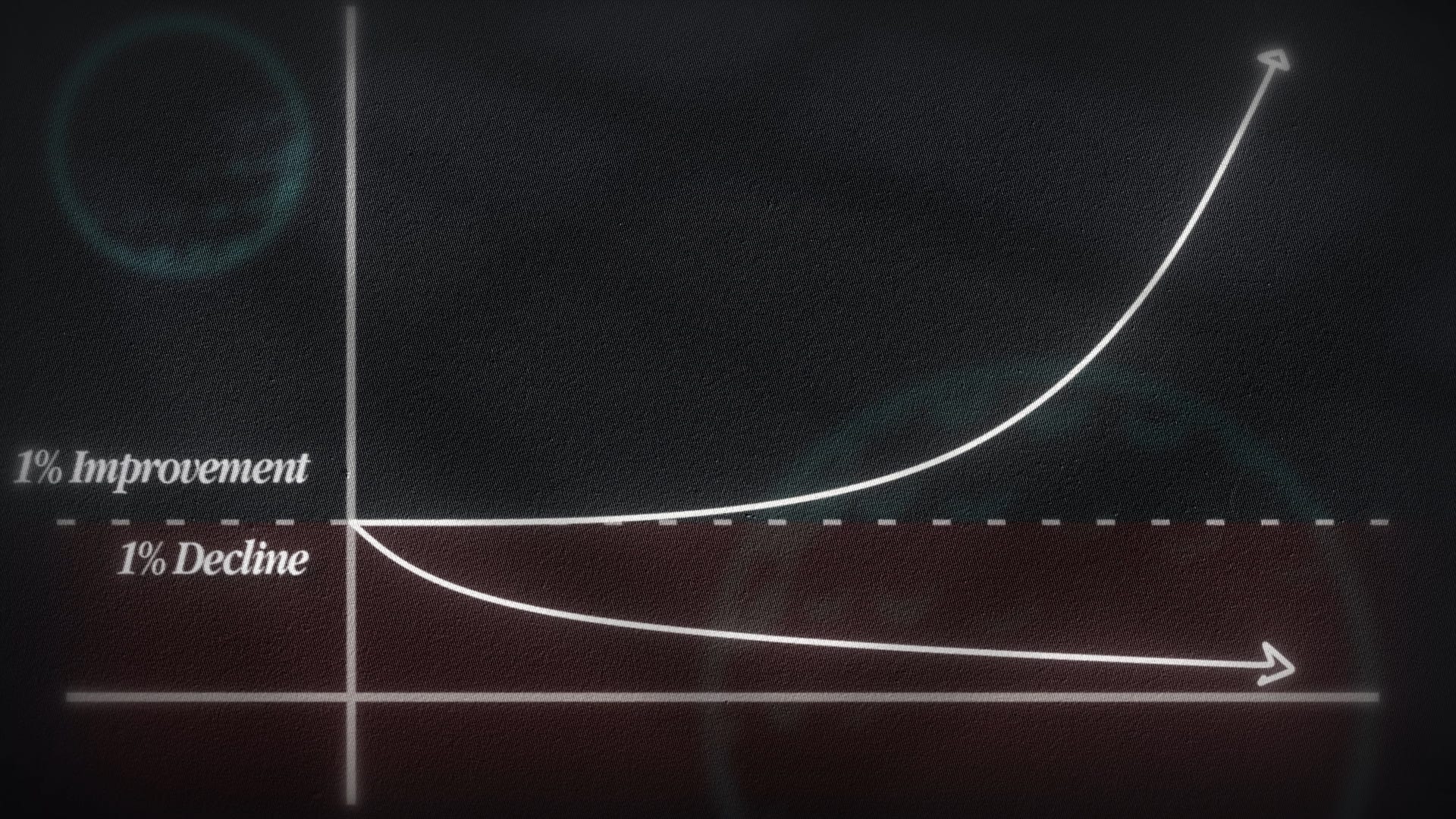
Progress is not linear. Imagine an ice cube sitting on a table. You gradually heat the room from 25 to 26 to 27… all the way to 31 degrees. Nothing seems to happen—the ice cube looks the same. Then the temperature hits 32 degrees, and suddenly the ice begins to melt.
And yet the temperature changing from 25 to 31 degrees was critical to the breakthrough, only it was invisible.
Shift from chasing big goals to building systems of tiny, consistent improvements.
Winners and losers often share the same goals. What separates them is who keeps advancing the ball.
The Progress Principle
Harvard professor Teresa Amabile’s research shows the most powerful motivator at work is making steady progress on meaningful tasks.
Small wins trigger a “progress loop”: progress improves your inner work life (emotions, motivation, perception), → which fuels more creativity and productivity → which creates more progress.
This is why checklists feel good. Each small completion boosts self-efficacy—the belief that you can actually do the thing.
Overcoming Resistance
Author Steven Pressfield calls the internal force that stops creative work Resistance.
The antidote? Advance the ball. This is part of a transition he describes from “being an amateur” to “turning pro.”
Amateurs wait for inspiration and work only when they feel like it.
Professionals show up every day, regardless of mood, health, or outside circumstances.
Professionals don’t need perfect conditions. They accept bad bounces and keep moving.
But you don’t have to take my word for it. On the Lex Friedman Podcast, billionaire and hedge fund manager Bill Ackman describes how he got through a low point in his life by simply advancing the ball.
If 15 minutes is too long, here’s the 1 minute version.
As Leo Tolstoy wrote in War and Peace:

Stop waiting. Stop praying for miracles.
Just advance the ball—today.
- Dante
p.s. If you want the full breakdown, watch the YouTube video.
Sources
The War of Art - Steven Pressfield
The Progress Principle - Teresa Amabile
Atomic Habits - James Clear
I love this! Ties so nicely with one of my favorite life philosophies “consistently good is better than occasionally great”.