
Fix Your Broken Systems With These 4 Mental Models
From The Great Mental Models Vol. 3 by Shane Parrish

By now, you probably know that we don’t rise to the level of our goals; we fall to the level of our systems. If you feel like you’re working hard but staying below your potential, you might be working inside a system... that sucks.
In this post, we’re diving into four mental models from Shane Parrish’s The Great Mental Models, Volume 3. They are all related to systems, so if you consider yourself to be a systems thinker, this one’s for you.
Equilibrium
In the context of systems thinking, equilibrium is essentially a system’s comfort zone—the state where the system is stable. While we often strive for stability, understanding how equilibrium works is crucial for realizing when a system is holding you back from your full potential.
Static vs. Dynamic Equilibrium
Most systems do not sit perfectly still. Instead, they exist in one of two states:
Static Equilibrium: A rare state where everything is at a complete standstill and perfectly balanced.
Dynamic Equilibrium: This is far more common. In this state, variables “dance” within a healthy range. If a variable drifts too far, the system nudges it back into the desired zone to maintain balance.
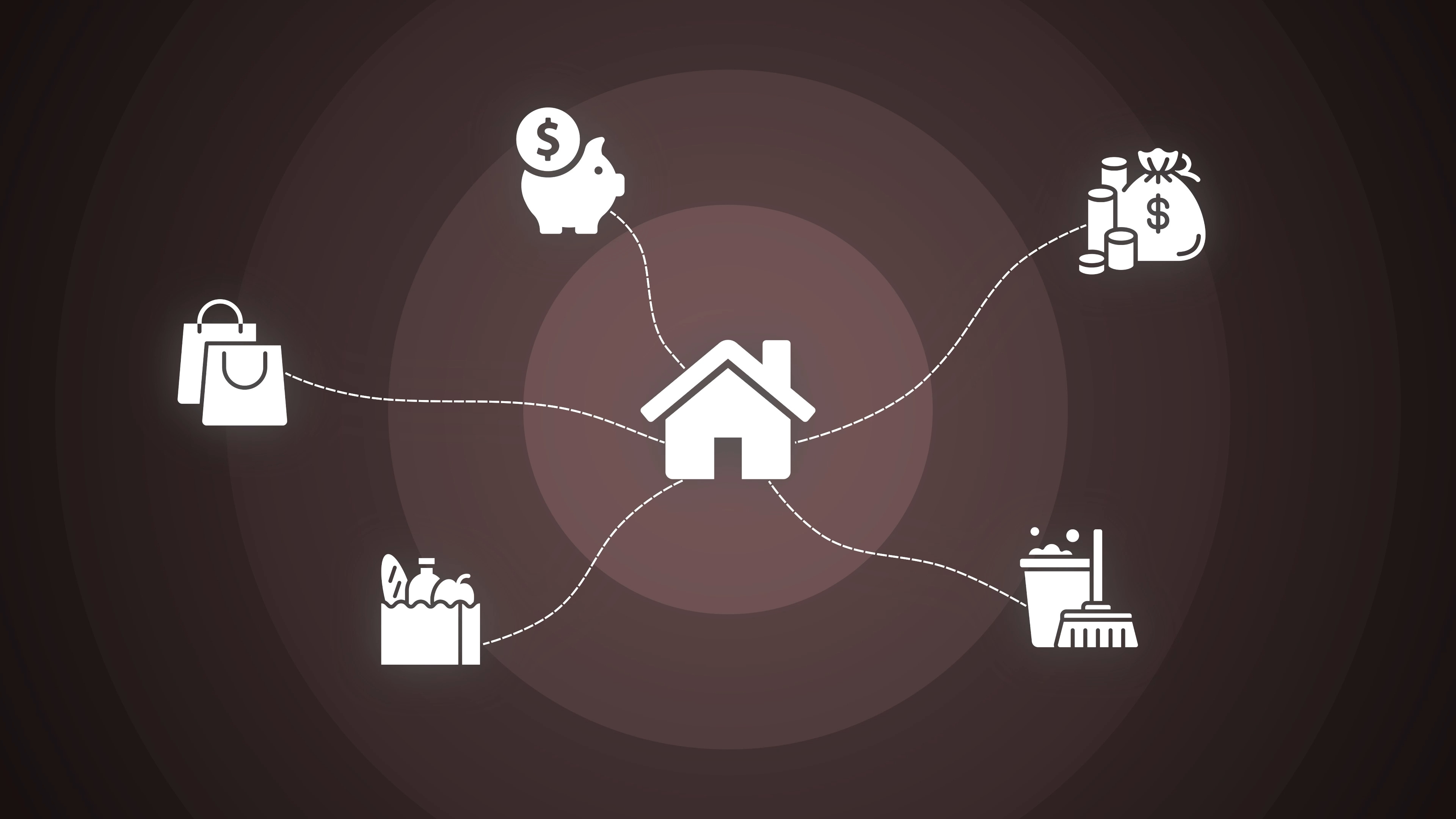
For example, a household’s spending functions as a system in dynamic equilibrium. If the family decides to pay for piano lessons, they might subtract that money from another spending category to keep the budget balanced. If they get a dog, they may increase their cleaning time to compensate for the mess, maintaining the household’s “stable” state.
The Trap of Inefficient Stability
A critical takeaway is that stable does not mean optimal. A system can achieve equilibrium in highly inefficient or even detrimental ways.
Consider a professional who gets sick and their productivity drops by half. To maintain their usual output (equilibrium), they might decide to work double the hours. While the system’s output remains stable, the method is inefficient; they would likely return to their normal pace much faster if they simply rested. Systems often drift toward a level of output that feels sustainable but is actually well below your potential.
The world will always try to make Amazon more typical – to bring us into equilibrium with our environment. It will take continuous effort, but we can and must be better than that. - Jeff Bezos, 2020 Letter to Shareholders
Growth Through Deviation
To build something that lasts or to improve, you often need short-term deviations from equilibrium. This concept is closely linked to Nassim Taleb’s idea of Antifragility:
Fragile systems break under volatility or chaos.
Robust systems are resistant to change. (both positive and negative)
Antifragile systems actually benefit from shocks and disruptions.
A classic example of this is muscle growth. When you lift weights, you create micro-tears in the muscle fibers— it’s technically a low-level injury. When those tears heal, the muscle becomes stronger than before, allowing the system to handle even more stress. Similarly, stepping outside of a system’s comfort zone is often exactly what is needed to maintain it and help it thrive in a constantly evolving environment.

Bottlenecks
In any system, bottlenecks are the narrow points where all progress slows down. It’s the choke point. The limiting factor. Understanding them is vital because they represent the part of the system under the most strain and are the most likely to break.
Here is a deep dive into how bottlenecks function and how to manage them:
The “Waste” of Non-Bottleneck Effort
The most important rule of bottlenecks is that focusing on anything else is usually a waste of time. Because a bottleneck limits the throughput of the entire system, making improvements in other areas just causes resources to pile up behind the narrow point, creating more pressure and waste. As the saying goes, “The chain is only as strong as its weakest link”.
Bottlenecks vs. Constraints
It is common to use these terms interchangeably, but there is a clear distinction between the following two terms:
Bottlenecks: These are parts of the system that we can alleviate, such as a slow process or a part of an assembly line that keeps breaking.
Constraints: These are fundamental limitations of the system that cannot be changed, such as the fact that there are only 24 hours in a day.
The Trap of False Dependencies
We often create “false dependencies” that act as artificial bottlenecks. This happens when you tell yourself, “I won’t do X before I do Y”. This is often a sign that you are the bottleneck of your own system, and these statements are frequently just excuses for procrastination.
The Silver Lining: Innovation and Quality
While usually seen as a negative, bottlenecks can actually be beneficial:
Driving Innovation: Historically, bottlenecks (like shortages) have forced the creation of new solutions. For example, the threat of losing access to silk and rubber during the 1930s and WWII led to the invention of Nylon and Ameripol (synthetic rubber).
Enforcing Quality: A deliberate bottleneck can be used strategically as a chokepoint to ensure quality control or to prevent a system from going awry.
Every system has a bottleneck; as soon as you fix the primary one, the next weakest link will become the new limiting factor. If you want to move fast and be effective, be intentional about identifying and fixing the right ones.

Scale
In systems thinking, scale is a mental model that highlights how systems change fundamentally as they grow. Scaling is rarely just a matter of “more”; it involves a total shift in how a system operates.
Scale is Not Simple Multiplication
A common mistake is assuming that scaling up is just a matter of multiplying current inputs. For example, if you are baking a cake for four people, you use a specific set of ingredients and tools. However, baking that same cake for 400 people isn’t as simple as multiplying everything by 100. You would need to change your entire process, using industrial-sized mixers and ovens—essentially requiring a completely new system designed for that specific scale. This demonstrates that scale alters behavior, not just quantity.
The Complexity Trap
As systems expand, their complexity almost always increases. While growth is often viewed as inherently good, scaling can actually make a system more fragile. A large system is more vulnerable because it relies on every one of its micro-systems to be dependable; there are simply more things that can potentially go wrong and screw up the big picture.
Case Study: The Small vs. Large Company
Small Company (5–10 people): Problems are solved face-to-face, and there is no need for HR or management consultants. Social pressure works well here—for instance, no one steals a lunch from the fridge because the group is small enough that the culprit would be obvious.
Large Company (Hundreds of employees): Many employees may never even meet. To avoid communication bottlenecks, the company must divide into teams, and extra effort is required just to ensure those teams are communicating with each other.
Ironically, the success that leads to scaling can often cannibalize the very things that made the system good in the first place. Because of this, staying small can sometimes be a strategic choice.
Designing for Growth
If you are building a habit, a project, or a business, you should always consider the future implications of scale.
Ask yourself: “How will this work when I have 10, 100, or 1,000 times as many users?”
By building with scale in mind from the start, you prepare the system to handle growth rather than collapsing under the weight of its own success.
Margin of Safety
In a world full of randomness and unpredictability, the margin of safety is your buffer against catastrophe. It is the deliberate gap between what a system can handle and what it is normally expected to endure.
Expecting the Unexpected
The fundamental starting point for this model is the realization that in complex systems, surprise should be the default assumption. Systems rarely behave exactly as predicted because variables interact in ways that produce outsized, nonlinear effects. A margin of safety provides the necessary “breathing room” so that when something sudden or unexpected happens, the system has time to react instead of immediately crashing.
Designing for the Worst Case, Not the Average
A common mistake in system design is building for the “average” scenario. However, a robust system must be designed for worst-case scenarios.
Leaving extra distance between you and the car in front is a margin of safety. You don’t need that space most of the time, but it becomes vital the moment the person in front of you slams on their brakes.
You are statistically safer in an airplane than in a car because planes are built with multiple layers of backup and redundancy. Because the cost of failure in flight is so high, engineers build in extreme margins of safety that are far beyond what is required for a normal flight.
Finding the Margin
Sometimes, to build a truly safe system, you have to find out where it breaks. SpaceX is a prime example of this. Their rocket explosions are often intentional tests designed to push the system to its limits. By discovering exactly where the integrity fails, they can rebuild the system with stronger buffers and redundancies where they are needed most.
Everyday Applications
Fortunately, you don’t have to be a rocket scientist to apply this model. In daily life, a margin of safety often looks like redundancy and financial buffers:
Emergency Funds: Keeping six weeks to a year of living expenses in the bank is a classic example of a margin of safety. It protects you against the “randomness” of job loss or unexpected repairs.
Backups: In data storage, having a cloud backup and a physical hard drive is a margin of safety against hardware failure.
Ultimately, mastering the margin of safety allows you to avoid the headaches and total collapses that come with the inherent uncertainty of life. It ensures that even when a system takes a hit, it stays functional rather than tipping towards failure.
Mental models are tools used by polymaths to win the long game. If you want to dive deeper, I highly recommend checking out the book that this post is based on, Shane Parrish’s The Great Mental Models Vol. 3
Which of these systems are you currently working on? Let me know in the comments!
By the way, this post only covered a few of the systems-related mental models in this book, and I have another post coming out shortly that will break down 4 more! Make sure you’re subscribed (it’s free) so you don’t miss it!
- Dante
My Products
The Sunday Systems Weekly Planner (Free)
My Socials
YouTube. LinkedIn. Instagram. X